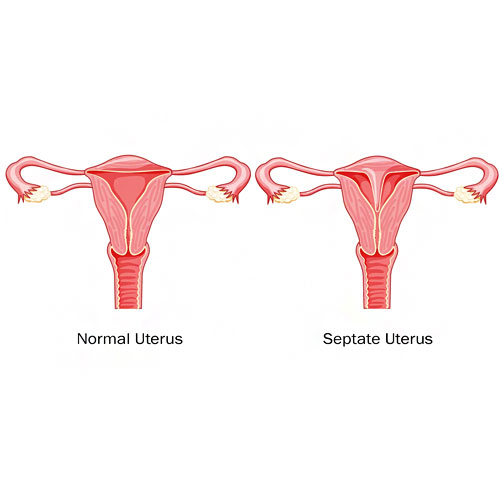
Septum removal is a surgical procedure to correct a uterine septum — a congenital malformation where a band of tissue divides the uterine cavity. This condition can lead to infertility, recurrent miscarriages, or menstrual irregularities.
What is a Uterine Septum?
A fibrous or muscular band dividing the uterus partially or completely
Present from birth (congenital)
Often associated with poor pregnancy outcomes
When is Septum Removal Advised?
Recurrent pregnancy loss
Infertility
Menstrual abnormalities or abnormal uterine bleeding
Procedure:
Usually done by hysteroscopic metroplasty (minimally invasive)
No incisions on abdomen; performed via the vagina
Outpatient procedure with quick recovery
Benefits:
Increased chances of successful pregnancy
Minimally invasive with minimal scarring
High success and low complication rate
Risks & Considerations:
Risk of uterine perforation (rare)
Adhesion formation inside the uterus
May require postoperative follow-up hysteroscopy
Septum removal via hysteroscopy is a safe and effective solution to improve fertility and pregnancy outcomes in women with uterine septum anomalies.